
Analyse the representations in Sources A and B. Use Butler’s Concept of Gender Performativity in your Answer.


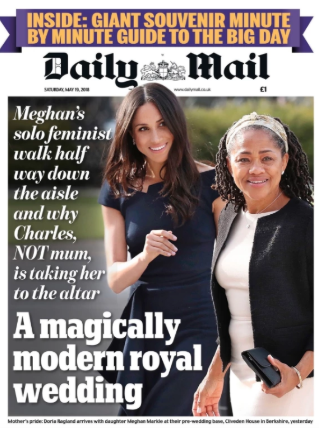
Sources A and B relate to Butler’s theory of gender performativity in how Markle’s femininity is interpreted differently no matter how she presents herself, portraying that gender is something constructed rather than something natural.
The Daily Mail could be said to be in contrast to Butler’s theory as it presents Markle as defying the expectations of women and femininity by choosing to go about her wedding – something that often sets very defined gender roles in society – in small ways to take control of how her gender presents itself and live a more feminist life. Although it could be said that she still exhibits gender performativity in how she presents herself, wearing dresses and makeup and presenting a stereotypically feminine view of herself to the world.
On the other hand, The Sun’s cover plays into Butler’s theory by twisting Markle’s gender performance into meaning that she is a manipulative seductress only in the relationship for money. The contrasts between these covers could be used as an example of Butler’s theory as they show contrasting views of the gender presentation of Markle, thus her gender isn’t her own but instead formed by the opinions and interpretations of others.
Analyse the Representations in Source A and Source B. Use Gauntlett’s theory of Identity to Support your Answer.


Gauntlett believes that the world around and media influences identity as a whole and changes who you want to be as well as how you present yourself, and that in the modern world gender identity can be less strictly feminine and masculine. Source A and B represent values that respectively agree with and defy Gauntlett’s theory.
Source A presents Prince Harry defying societal expectations by leaving the royal family while also playing along to the gender roles that are often depicted by the media – being the brave man of the family and leaving the public eye to protect his family. Romantic relationships relating to the royal family are often depicted in the media as the idyllic fairy-tale life, playing into the deep set traditions of gender in society. The Metro is aimed at the everyday working class person so stories like this may appeal to the fairy-tale ideals of someone with an everyday life meeting and falling in love with a royal and being protected by a prince.
On the other hand, Source B displays how gender isn’t always black and white and depicts someone defying society’s expectations by being a trans soldier. Often soldiers are depicted as strong, protective and masculine however this isn’t always the case. This is one example of how gender isn’t always a clear split of masculine and feminine as someone who identifies more with femininity is a soldier on the ‘front line,’ bravery and strength isn’t exclusive to men despite how it is often presented – yet this could also be seen as an opposing view to Gauntlett’s theory as despite the media’s influences this person’s identity strayed from the presentation of gender that the media’s stereotypes would let you believe exist.

 Jennifer Higgins - Media Studies